It's 6:15 in the morning, and the bus from our lodge has just arrived.
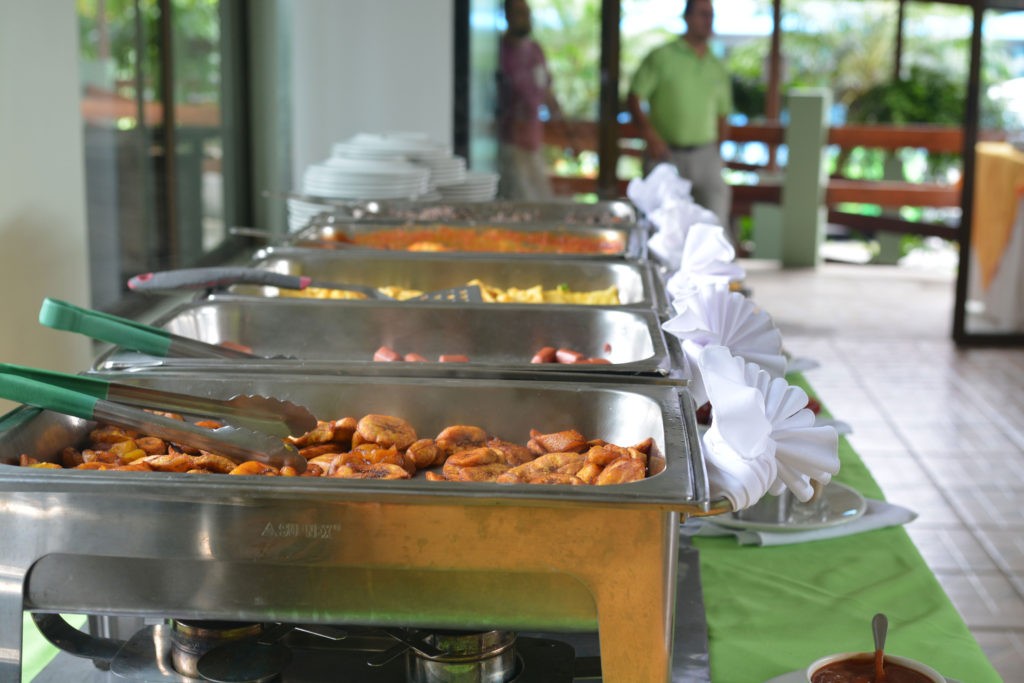
The kids are thrilled; they love the bus and experience their first ride as an experience in its own right. 1 hour later, after crossing the Braulio Carillo National Park, we arrive at the lodge's restaurant in Guapiles, a town halfway between the capital San José and the Caribbean coast.
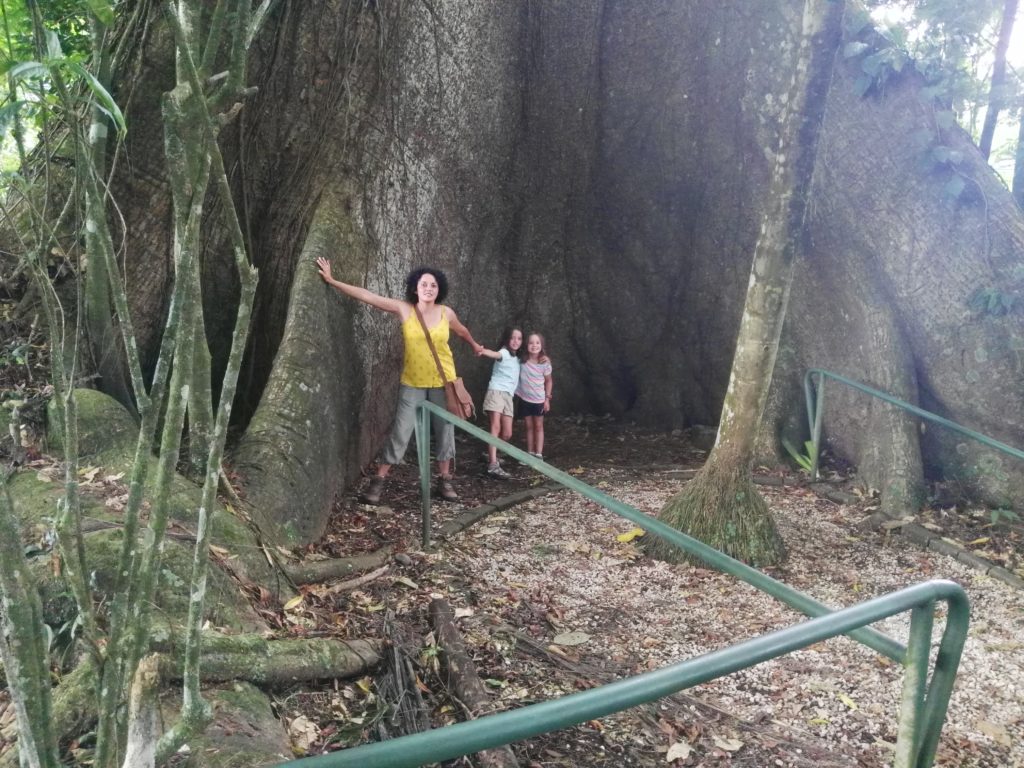
Once we arrived at the restaurant, we were pleasantly surprised to see a few sloths taking a leisurely stroll in the vicinity. Our first stop was therefore an opportunity to take a few photos and take on the giant of the link, a cheese tree, also known as Kapokier or Ceiba pentandra.
Cheese tree
We take the road back to the La Pavona boarding pontoon.
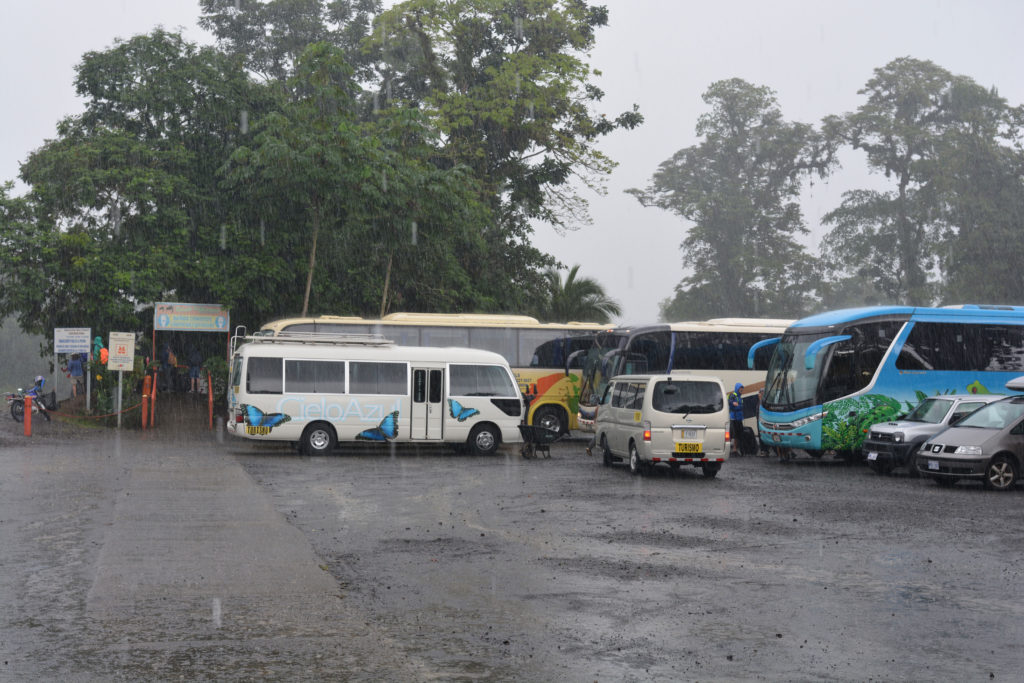
La Pavona pier
The buses arrive in the pouring rain. We run for cover under the ranch, which is home to dozens of tourists who, like us, are waiting for the call to join our boat.
On the canals
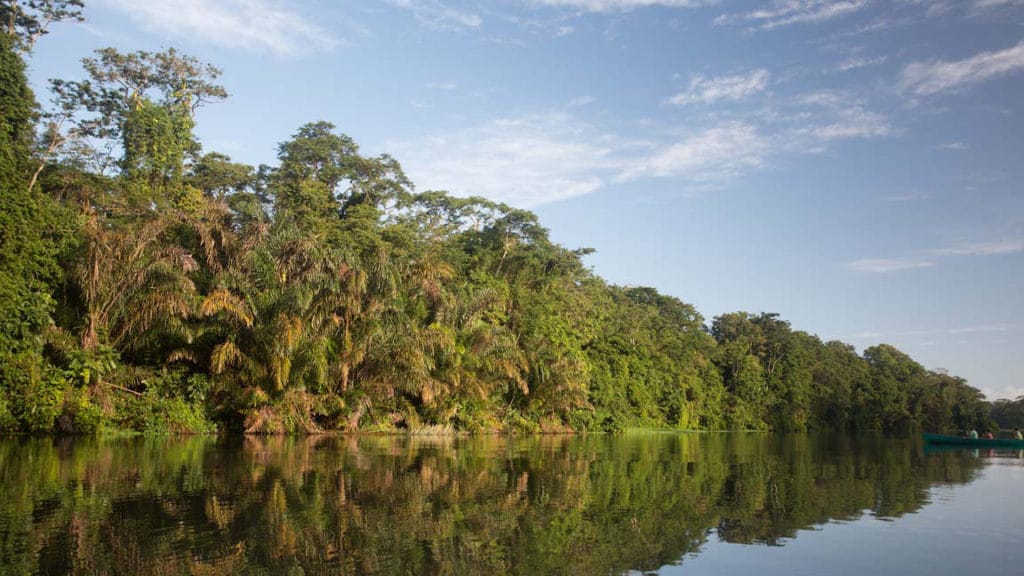
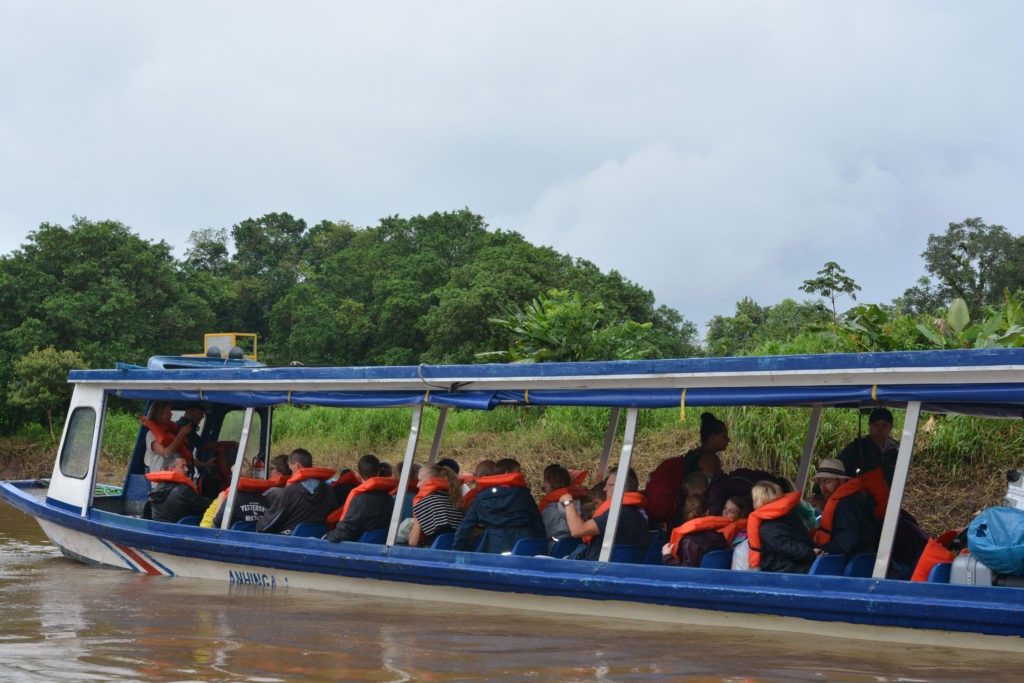
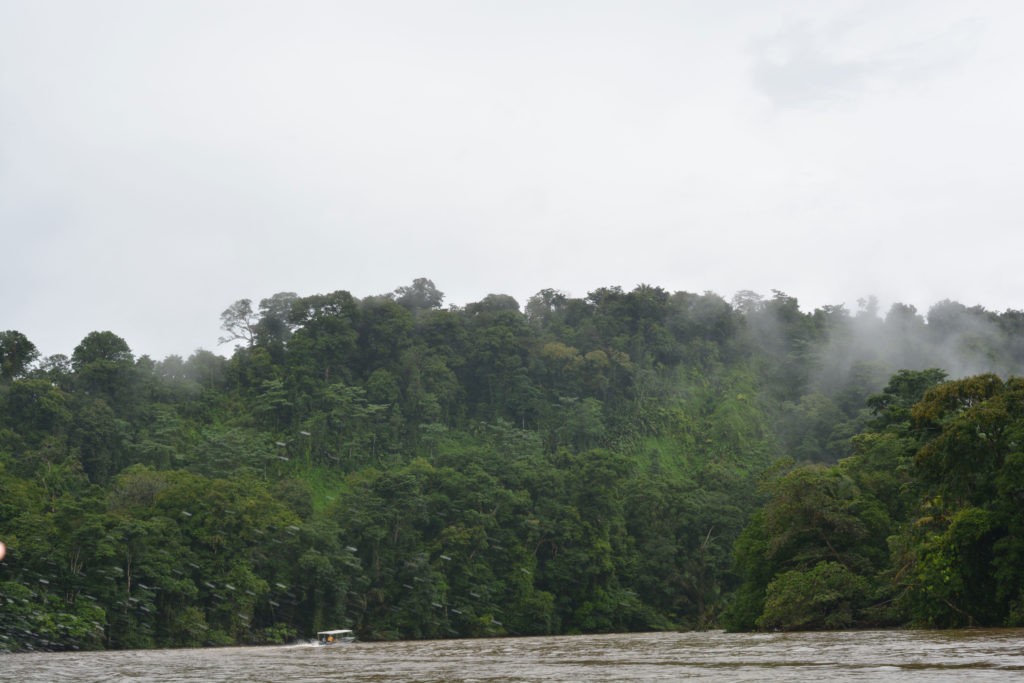
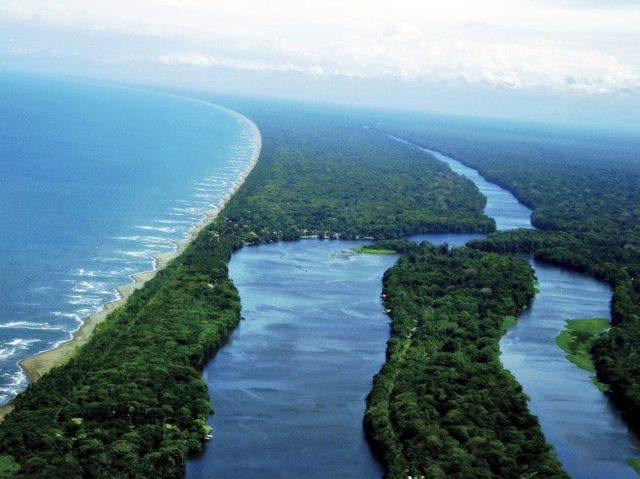
The rain having finally stopped, we settled into the lodge boat and began our journey through the Tortuguero canals. The journey alone is worth the trip to Tortuguero, as it's a complete change of scenery!
It's not uncommon to spot numerous animal species, including monkeys, basilisks and green iguanas, and the multitude of birds around us adds to the beauty of the scenery.
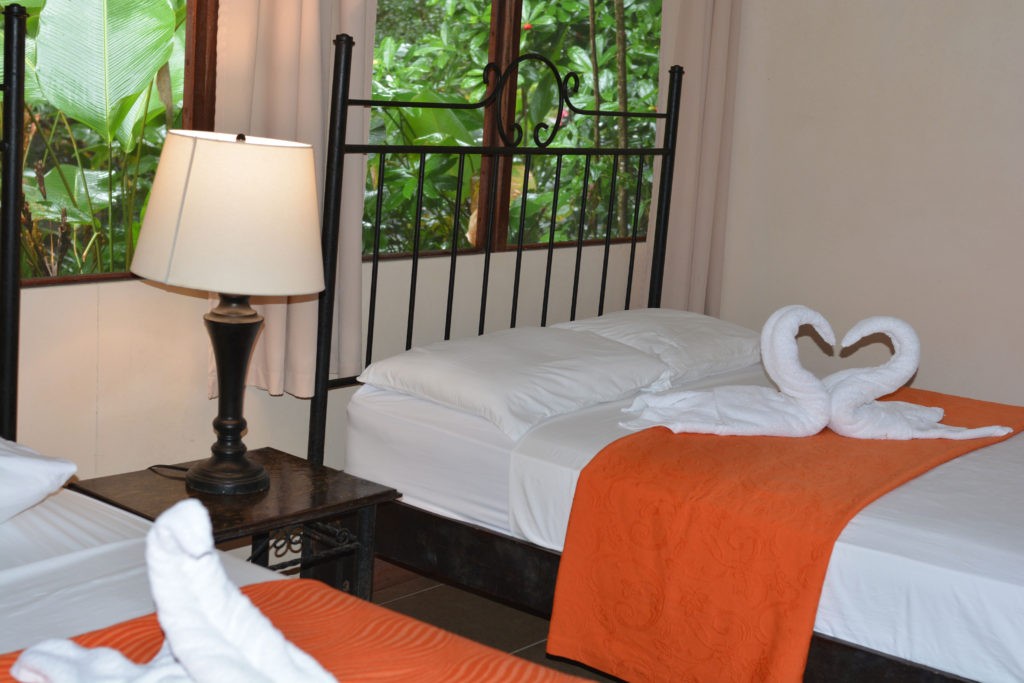
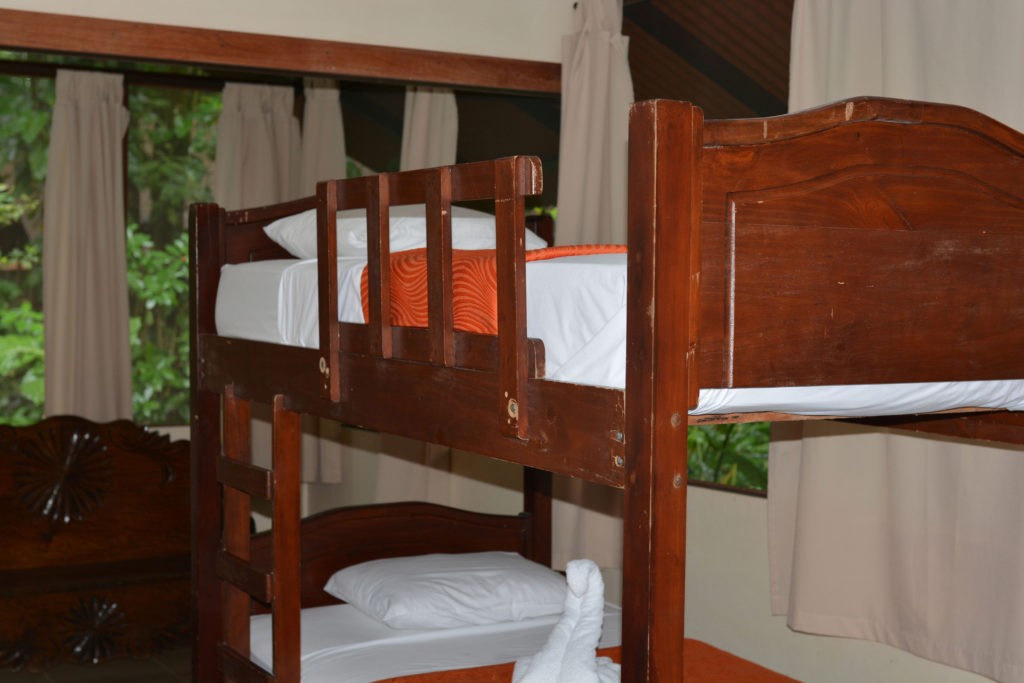
The welcome at the lodge is delicious, as a small cocktail made from fresh fruit awaits us. We take possession of the premises and our room, and begin to explore the lodge. It's large, well-maintained and the rooms are very comfortable. In fact, our room has two queen-size beds and a bunk bed.
You guessed it, there's a fight between the girls to see who gets to sleep on the top bunk.
We then head off to eat at the lodge's restaurant, as the motorboat tour of the Tortuguero canals is scheduled right afterwards. This is, of course, the main attraction, and we don't want to miss it.
The Tortuguero canal tour
The life jackets are on, the parkas are ready and so is the camera. As nature guides, we've had the opportunity to visit these canals many, many times, and yet the excitement of showing our daughters the beauty of these canals is always there.
The boat heads for the park warden station to collect our tickets. We keep them, as these tickets are valid for the whole day, giving us access to the park. Tortuguero National ParkWe'll use them again to observe green turtle egg-laying at night.
We begin our tour by exploring the main channel, where our guide tells us about the village of Tortuguero, its historic logging activity and its evolution towards sea turtle conservation.
Tortuguero's wildlife
The tour continues to a smaller, more intimate channel, where we feel part of this forest, each playing his Indiana Jones, his Crocodile Dundee and secretly hoping to see an animal before the guide does. Despite our best efforts, it's our guide who shows us the first animal, an Emerald Basilisk, a male recognizable by its more pronounced crest than the female. This lizard was standing 3 metres away from us, stinging our eyes, and we hadn't seen a thing. Its leaf-colored camouflage and morphology enabled it to hide from the eyes of the 25 passengers on board.
Later, we'll see, in turn, howler monkeys, toucans, a spectacled caiman, herons, egrets, cormorants, anhingas, and of course the large green iguanas also known as "tree chickens", as in the past, these arboreal reptiles were eaten by the local population. Fortunately, this is no longer the case.
We return to our lodge, full of images and emotion. The purr of the boat's engine is beginning to make the girls drowsy, and the fatigue of the day is making itself felt.
After dinner, we head back to the beach and Tortuguero National Park, where we hope to spot a green turtle laying its eggs.
After a restorative nap and our meal, we take a taxi-boat at night to the village of Tortuguero (our lodge is located on a different strip of land from the village).
The nocturnal turtle-laying observation tour
Our guide, Adolfo, is waiting for us at the pier and gives us our first instructions. Among these, perhaps the most important: to be as discreet as possible (and of course not to take any photos - this pleasure is a pleasure to be remembered, not on film) so as not to frighten the turtle if we're lucky enough to see it.
Here it is
And so it is, we even see two of them. The first shows up as she's heading out to sea, and a few minutes later the second arrives and has already started laying her eggs. We position ourselves behind her, with the children right behind, to get a good look at the eggs. They're silent, eyes as big as bonnets, listening to the turtle breathe deeply, exhaling and expelling her eggs in record time. The turtle is in a trance, paying little attention to us. Not missing a beat, the girls ask questions, watching the little ping-pong balls fall on top of each other without breaking.
Back to the sea
Suddenly, she's done. We take a step back as she begins to cover the eggs. Using her flippers, she sends sand towards the back of her body to cover the eggs. She has to hurry because she'll have to get back to the sea quickly to avoid betraying the presence of the eggs to predators. The girls get a lot of sand on their faces and bodies, as they don't want to miss out on the show.
The delivery
The exhausted turtle returns to the sea, and we follow in its wake, wishing it and its eggs good luck. The children still can't believe their eyes, and are strangely silent as we walk back to the pier. We see them pensive, still reeling from their emotions, and we're more than happy that the magic has worked. We know that this night will remain engraved in their memories for a long time to come.
Back at the hotel, the children fall asleep immediately, and we immediately follow them. We enjoy the night sounds of the rainforest.
We bid you good night.
 Once we arrived at the restaurant, we were pleasantly surprised to see a few sloths taking a leisurely stroll in the vicinity. Our first stop was therefore an opportunity to take a few photos and take on the giant of the link, a cheese tree, also known as Kapokier or Ceiba pentandra.
 The buses arrive in the pouring rain. We run for cover under the ranch, which is home to dozens of tourists who, like us, are waiting for the call to join our boat.
 The welcome at the lodge is delicious, as a small cocktail made from fresh fruit awaits us. We take possession of the premises and our room, and begin to explore the lodge. It's large, well-maintained and the rooms are very comfortable. In fact, our room has two queen-size beds and a bunk bed.
 You guessed it, there's a fight between the girls to see who gets to sleep on the top bunk.
We then head off to eat at the lodge's restaurant, as the motorboat tour of the Tortuguero canals is scheduled right afterwards. This is, of course, the main attraction, and we don't want to miss it.
You guessed it, there's a fight between the girls to see who gets to sleep on the top bunk.
We then head off to eat at the lodge's restaurant, as the motorboat tour of the Tortuguero canals is scheduled right afterwards. This is, of course, the main attraction, and we don't want to miss it.
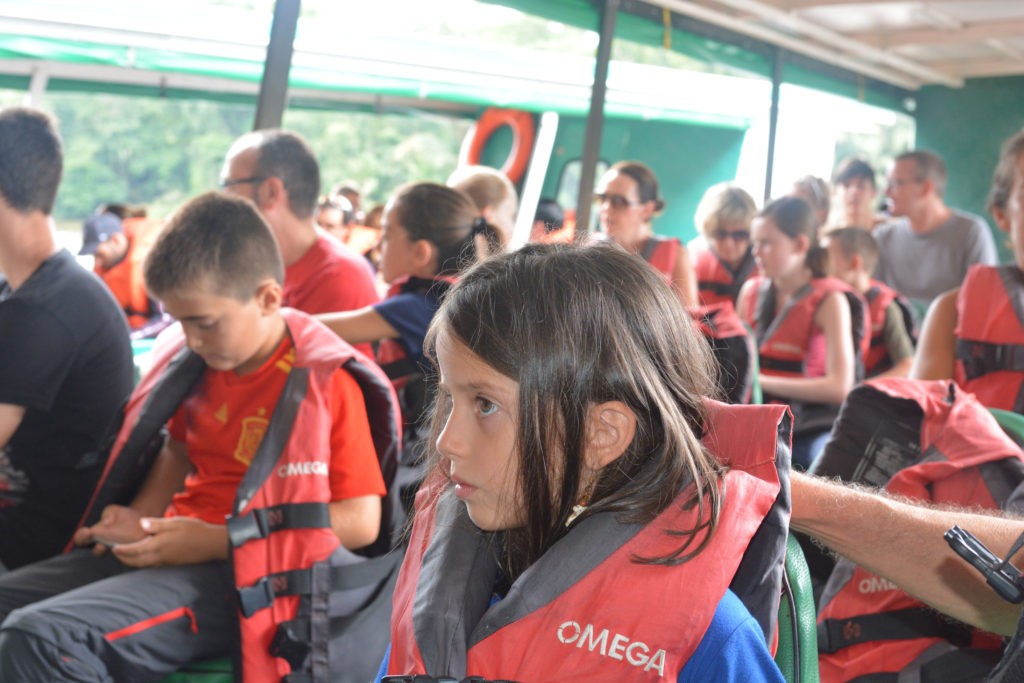
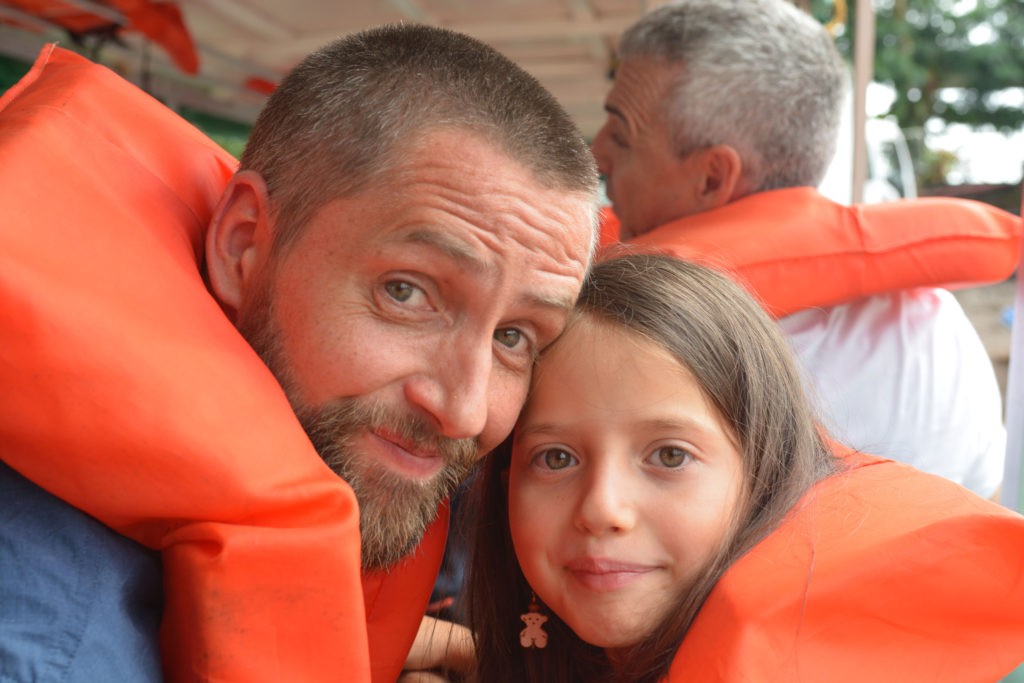 The boat heads for the park warden station to collect our tickets. We keep them, as these tickets are valid for the whole day, giving us access to the park. Tortuguero National ParkWe'll use them again to observe green turtle egg-laying at night.
We begin our tour by exploring the main channel, where our guide tells us about the village of Tortuguero, its historic logging activity and its evolution towards sea turtle conservation.
The boat heads for the park warden station to collect our tickets. We keep them, as these tickets are valid for the whole day, giving us access to the park. Tortuguero National ParkWe'll use them again to observe green turtle egg-laying at night.
We begin our tour by exploring the main channel, where our guide tells us about the village of Tortuguero, its historic logging activity and its evolution towards sea turtle conservation.
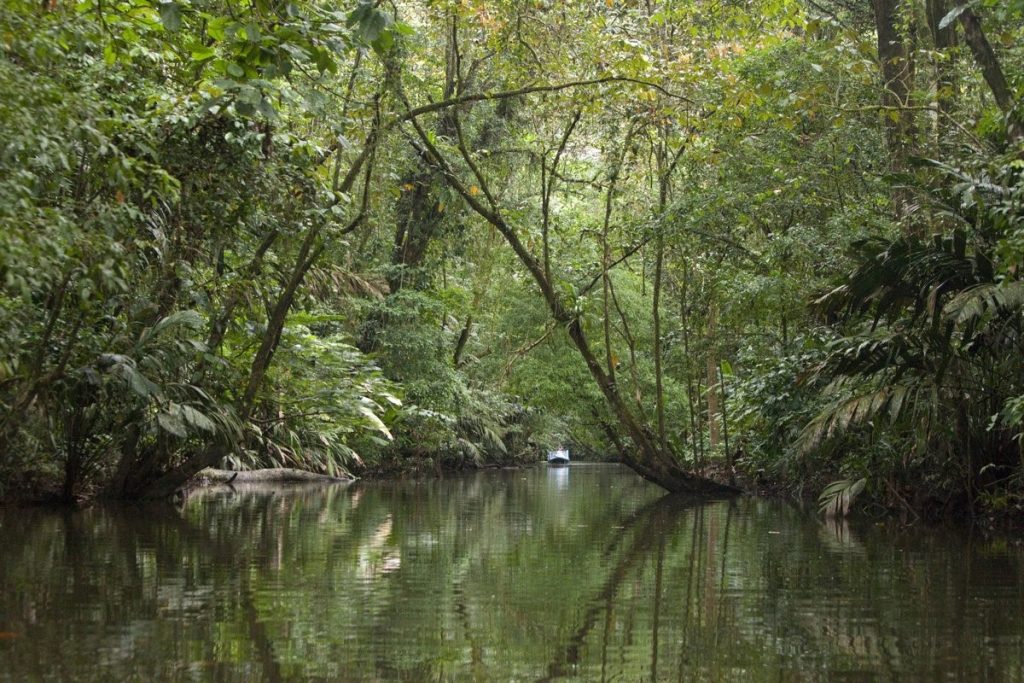
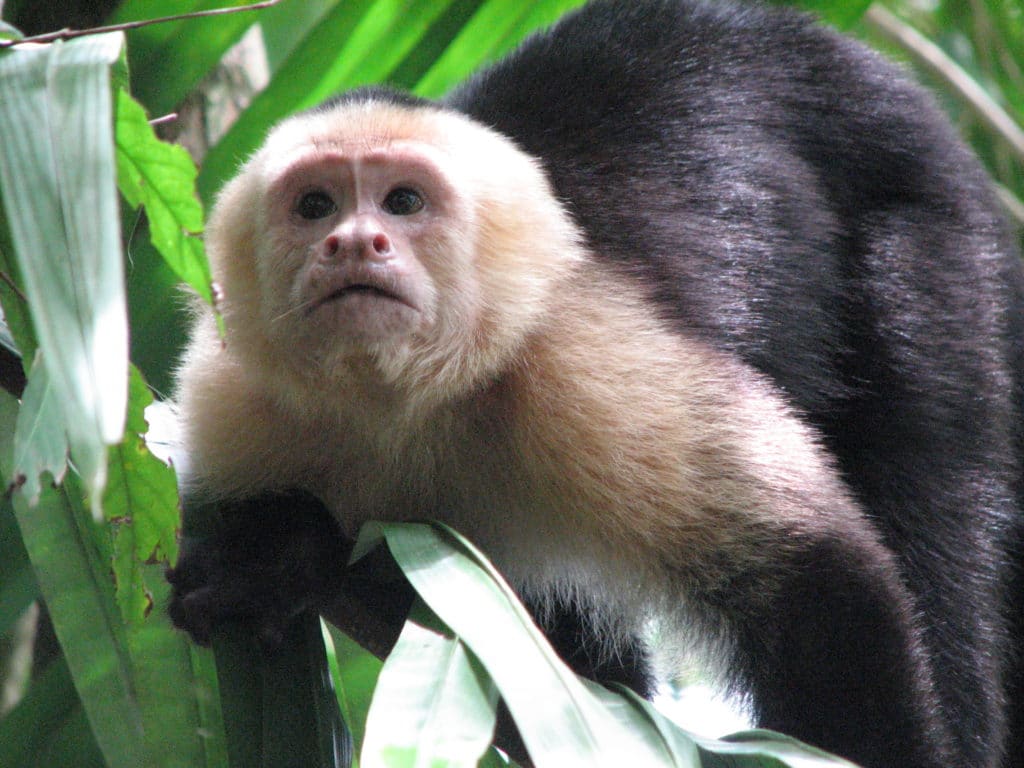 Later, we'll see, in turn, howler monkeys, toucans, a spectacled caiman, herons, egrets, cormorants, anhingas, and of course the large green iguanas also known as "tree chickens", as in the past, these arboreal reptiles were eaten by the local population. Fortunately, this is no longer the case.
We return to our lodge, full of images and emotion. The purr of the boat's engine is beginning to make the girls drowsy, and the fatigue of the day is making itself felt.
After dinner, we head back to the beach and Tortuguero National Park, where we hope to spot a green turtle laying its eggs.
After a restorative nap and our meal, we take a taxi-boat at night to the village of Tortuguero (our lodge is located on a different strip of land from the village).
Later, we'll see, in turn, howler monkeys, toucans, a spectacled caiman, herons, egrets, cormorants, anhingas, and of course the large green iguanas also known as "tree chickens", as in the past, these arboreal reptiles were eaten by the local population. Fortunately, this is no longer the case.
We return to our lodge, full of images and emotion. The purr of the boat's engine is beginning to make the girls drowsy, and the fatigue of the day is making itself felt.
After dinner, we head back to the beach and Tortuguero National Park, where we hope to spot a green turtle laying its eggs.
After a restorative nap and our meal, we take a taxi-boat at night to the village of Tortuguero (our lodge is located on a different strip of land from the village).